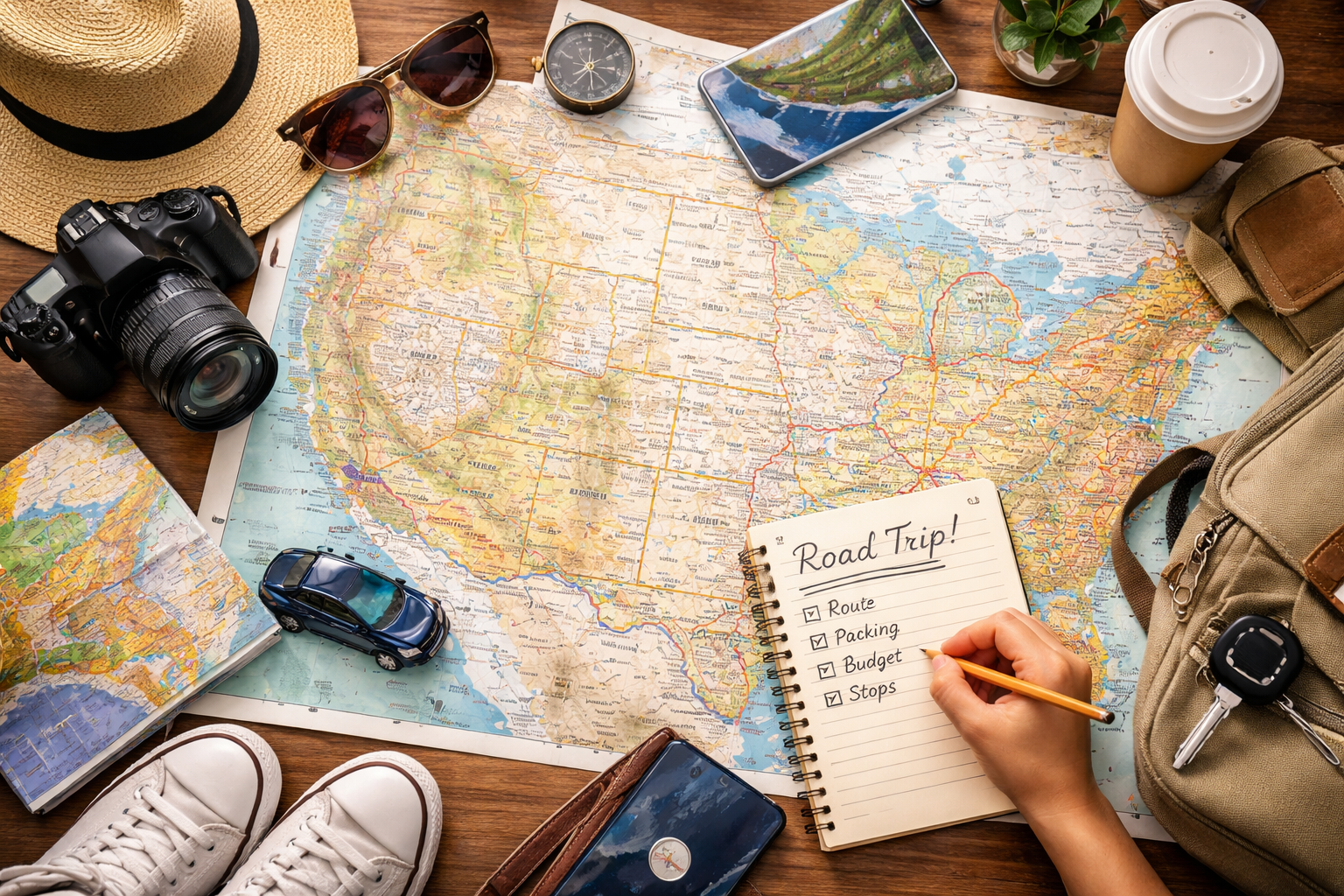
A road trip is one of the best ways to experience the United States. From coastal highways and desert landscapes to mountain passes and historic towns, the freedom to explore at your own pace is what makes road trips so special. But the size of the country and long distances mean good planning makes all the difference.
This guide breaks down how to plan a successful U.S. road trip step by step — without overcomplicating it.
🚗 1. Choose the Right Route (Don’t Do Too Much)
The biggest mistake first-time road trippers make is trying to see everything.
Instead of crossing multiple regions, focus on one core area, such as:
- The Pacific Coast
- The American Southwest
- New England
- The Rocky Mountains
- The Deep South
This keeps driving distances reasonable and allows time to actually enjoy each stop instead of rushing.
Rule of thumb:
4–6 hours of driving per day is comfortable. Anything more starts to feel like work.
🗺️ 2. Plan Your Stops (But Leave Flexibility)
Start by identifying:
- Major destinations (national parks, cities, landmarks)
- Scenic routes instead of highways when possible
- Overnight stops every 200–300 miles
Then leave space for:
- Unexpected viewpoints
- Small towns
- Local food spots
- Short hikes or roadside attractions
A loose plan is better than a rigid schedule.
🧳 3. Pack Smart (Less Is More)
Road trips give you flexibility, but overpacking can quickly clutter your car.
Essentials to bring:
- Comfortable clothing for changing weather
- A light jacket (even in warm regions)
- Sunglasses and sunscreen
- Reusable water bottle
- Phone charger / car adapter
- Offline maps or downloaded routes
If you’re visiting national parks or rural areas, pack snacks — services can be limited.
⛽ 4. Budget for More Than Just Gas
Your road trip budget should include:
- Fuel
- Lodging
- Food
- Park entrance fees
- Parking
- Emergency buffer
Costs vary widely by region. Western road trips often involve longer distances, while coastal or northeastern trips may include higher accommodation costs.
Planning ahead prevents surprises.
🌦️ 5. Check Weather & Seasons Carefully
The U.S. has extreme seasonal differences.
Before you go, research:
- Snow closures in mountain areas
- Summer heat in deserts
- Hurricane season in coastal regions
- Fall foliage timing in the Northeast
Weather can affect not only comfort but road access and safety.
🏨 6. Decide How You’ll Handle Lodging
You have three main options:
- Book everything in advance (peace of mind)
- Mix booked stays with flexible nights
- Fully spontaneous (best in low-traffic seasons)
National parks and popular regions often sell out quickly, so some advance planning is smart.
📱 7. Use the Right Tools
Helpful road trip tools include:
- Google Maps (routes + traffic)
- Offline maps for rural areas
- Weather apps
- Park service websites
- Note-taking apps for quick planning
Keep everything accessible without relying on constant cell service.
🧠 Final Road Trip Advice
A great U.S. road trip isn’t about distance — it’s about experience.
Slow down. Take detours. Stop when something looks interesting. Some of the best memories come from unplanned moments, not famous landmarks.
With the right balance of planning and flexibility, a road trip across the United States can be one of the most rewarding ways to travel.
Leave a Reply