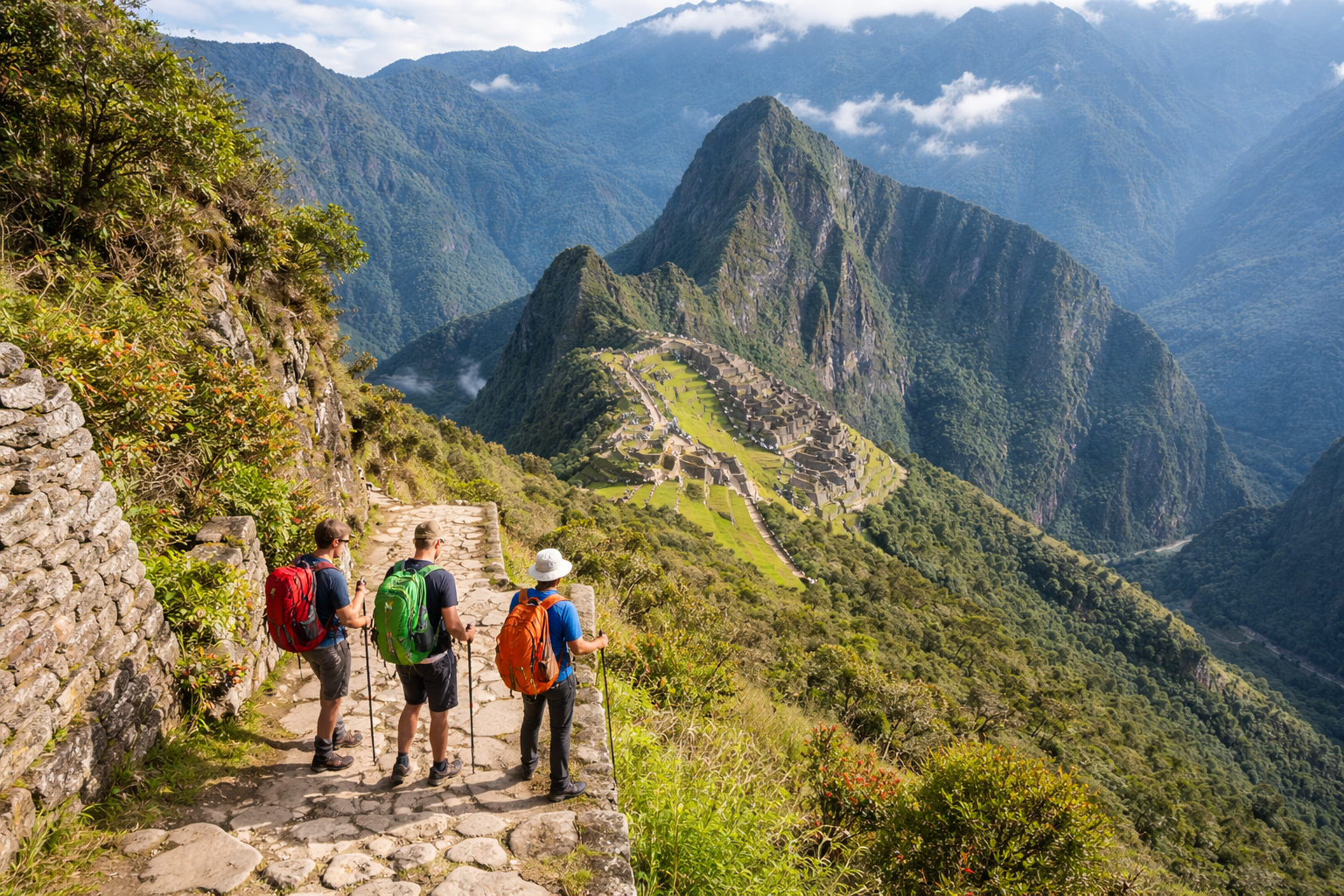
✅ Yes — the Inca Trail is widely considered one of the most iconic and rewarding trekking experiences in the world.
But it’s worth it for the right type of traveler.
The Inca Trail is not just a way to reach Machu Picchu — it’s a multi-day guided journey through ancient ruins, high-altitude mountain passes, and cloud forest, ending with a sunrise arrival at Machu Picchu through the Sun Gate 🌄.
For travelers who value the experience of the journey itself, it often becomes the highlight of their Peru trip.
🏔️ Why the Inca Trail Is Worth It
🌅 The Sun Gate Arrival
One of the biggest reasons people choose the Inca Trail is how you arrive at Machu Picchu.
Instead of taking a bus 🚍, you walk through Inti Punku (the Sun Gate) after days of trekking — a moment many travelers describe as emotional, unforgettable, and deeply rewarding.
🏛️ Ancient Inca Ruins Along the Way
Unlike alternative routes, the classic Inca Trail passes through multiple original Inca archaeological sites that are only accessible on foot.
Guides explain the history, culture, and significance of each site, turning the hike into a living history experience, not just a physical challenge.
🧭 Fully Guided & Organized
The Inca Trail must be done with a licensed operator. Tours typically include:
- Professional guides 🧑✈️
- Porters and support crew 🎒
- Meals and campsites 🍽️🏕️
- Transportation and Machu Picchu entry 🎟️
This structure allows travelers to focus on the experience rather than logistics.
🏆 A True Sense of Accomplishment
Completing the trail — especially reaching Dead Woman’s Pass at over 13,000 ft — gives a strong sense of achievement 💪. Many travelers say the challenge is what makes the final payoff so meaningful.
⚠️ Things to Consider Before You Go
The Inca Trail is worth it — but it’s not for everyone.
🥾 Physically Demanding
Long hiking days, steep stone steps, and high altitude make the trail challenging even for fit travelers.
🌬️ Altitude & Fatigue
Altitude affects everyone differently. Headaches, shortness of breath, and fatigue are common, especially on Day 2.
⏳ Limited Permits
Permits are capped and often sell out months in advance. This lack of flexibility is a dealbreaker for some travelers.
💰 Higher Cost Than Alternatives
Because of permits, crews, and logistics, the Inca Trail is more expensive than other routes to Machu Picchu.
🗺️ How Travelers Experience the Inca Trail
Most travelers experience the Inca Trail through organized trekking packages, which vary by comfort level.
👥 Small Group Treks
The most common option. These include:
- Licensed guides
- Camps, meals, and porters
- Machu Picchu entry and transport
Great for travelers who enjoy shared experiences and structure.
🏕️ Comfort vs Budget Options
Some tours offer upgraded tents, porters for personal gear, or more comfortable camps, while others focus on affordability.
Choosing the right operator has a huge impact on how enjoyable the trek feels.
🎒 Who the Inca Trail Is Best For
✔️ Travelers who value experience over convenience
✔️ Those interested in history + hiking combined
✔️ People prepared for altitude and physical effort
✔️ Visitors planning a once-in-a-lifetime Peru trip
It may not be ideal for travelers who:
❌ Want flexibility or last-minute plans
❌ Prefer independent travel
❌ Are only interested in Machu Picchu itself
⭐ Is the Inca Trail Worth It Overall?
If you care about how you arrive at Machu Picchu — not just seeing it — the Inca Trail is absolutely worth it.
For many travelers, it becomes more than a hike:
It’s a story, a challenge, and a memory tied to the journey itself.
🧭 Planning Tip
Because permits are limited and logistics are complex, many travelers review Inca Trail tour packages ahead of time to compare dates, group sizes, and comfort levels.
Leave a Reply